Monday, November 19, 2007

laura arbelaez valeria londoño


Government

- The Greek government was divided into monarchies, oligarchies, tyrannies and democracies. This division was made by Aristotle.
- Athens began to use democratic government in 510B.C. Then other Greek city-states began using the same system.
- First Greeks use an empire to rule all the city-states, but this affected the communities because they couldn’t vote.
- Women had no rights.
- Democracy was created so that everyone had the right to give their opinion, also to benefit the middle class.
- Greeks use city-states and began with democracy.
- Democracy began on Greece, and now it is the system of government in most of the world.
References
Carr, Karen. 1998, Associate Professor of history, Portland State University. Friday, Nov 10, 2006. http://www.historyforkids.org/learn/greeks/govenment/index.htm
The ancient Greek world. 1998, mail.http://library.thinkquest.org/19317/htm/governme.htm




*Greek Science & Technology*

Greek civilization created many improvements in science and technology.
Also, there were some characters that created and improve technology in that time.
Archimedes was a Greek mathematician, phsychist and engineer. He explained the
principle of the lever, and worked on mechanics. The screw was another invention
of him, which helped to transfer water. In mathematics, Archimedes aproximate the
value of pie and gave the aproximate value of the square root of 3.

Pythagoras was an other important Greek mathematician. He created the
Pythagorean theorem and the Pythagoreanism religion.

Plato was a Greek philosopher and mathematician, which was the founder of the Academy of Athens. He wrote many philosophical dialogs about metaphysics, structure, women, and epistemology.

There were other inventions made, such as:
The Astrolabe: A device used to determine the location, and longitude.

The Cannon: Created by Ctesibius of Alexandria and first used with compressed air.

Crane: This devise helped Greeks in constructions by lifting heavy materials with less work.

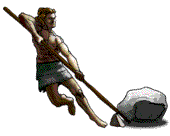
Lever: The lever was a simple but smart way of quickly lifting heavy weights using a counter-weight.

Gears: The gears were the key for many technology inventions of that times and for the future, lever by themselves were useless.

Water Pumps: the water pumps helped to carry water to elevated places having to deal with gravity.

Santiago & Tomas
Sources:
http://www.mlahanas.de/Greeks/Greeks.htm
http://www.angelfire.com/ca5/ancientgreecescience/

GREEK RELIGION

GREEK RELIGION


  • Religion was important to the Greeks because they believed that if they prayed they would have a better life. Also, they would take care of them when they die.


  • Polytheistic---believed in many Gods


  • They sacrificed animals, built temples, and had festivals with music, dancing etc. *orcles: holy sites


  • Greeks believed that Gods and Goddesses lived at Mount Olympus.


  • Every God had a specific role.

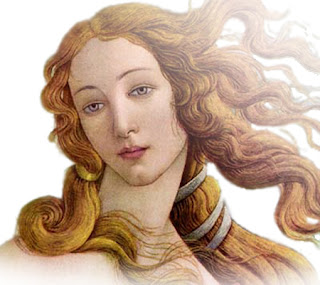
Aphrodite - goddess of love

Ares - god of war

Athena - goddess of war and wisdom

Poseidon - god of the sea

Zeus - king of the gods


BY: Juan Pablo Valencia and Camila Jaramillo


http://oncampus.richmond.edu/academics/education/projects/webunits/greecerome/Greecerelig1.html


GREEK ARCHITECTURE


  1. Greek life was dominated by religion, so it is not surprising that Greek temples were the biggest and most beautiful. They had political purpose, because they were built in order to celebrate political power and pride, or to offer thanksgiving to the patron of a city for his success in wars.


  2. The Greeks developed 3 architectural systems, called orders, each one had its own characteristics, proportions and details. They were: Doric, Ionic and Corinthian. The Doric style is sturdy (strong) and its top is plain, the Ionic style is thinner and more elegant, and the Corinthian style is rarely used in the Greek world, but is often seen on Roman temples.


  3. The common materials used in the Greek architecture were: wood, used for supports; unbaked brick, used for walls and public buildings; terracotta, used for decoration. Architects used these materials to construct five types of buildings: religious, civic, domestic, funerary and recreational.


  4. Before starting the Classical period, the Greeks had begun to lay out cities in a grid-like pattern, with streets regularly intersecting at right angles, and houses by blocks. The carefully planned civic spaces had become common in the Greek city-states.


  5. The Parthenon is one temple that is very famous and beautiful, but also very basic in its construction. It was built between 447 and 438 BC; it was the fist building to be constructed on the known Acropolis. It is called “octostyle peripteral” because it has 8 columns in the front, and it has in the back a chamber also called the Parthenon.

BY: Carolina Angel and Eugenia Robledo 10A

Ancient Greece Sports


- Many sports existed before Ancient Greece. The relevance of these sports to the Greeks was incredibly important to their culture. Due to this, they created the Olympic Games which were held in a small village of Peloponnesus called Olympia.
- The Olympic Games were a series of competitions between the city–states of Ancient Greece. They were held between 776 BCE until 393 ACE.
- The origin of these competitions is still unknown yet it is claimed that they came from a series of myths such as the ones of Pelops and Heracles.
- The games first started in Olympia, Greece near the sanctuary site of Zeus. They were held every four years calling this period an Olympiad, which was a basis for the calendar system. Over the years, there was a struggle in Greece to control the Olympics.
- Back then, only free men who spoke Greek were allowed to participate. This men had to compete nude due to a law established in 720 BCE.
- The first competition they had was the Stadion Race which consisted of running a length of 180 – 240 meters which was the length of the stadium. Later the Diaulos, Dolichos, Hoplitodromos were introduced as well as some of the common games that exist today that were compacted in the Pentathlon.
- The winner athletes were awarded an olive branch which represented a lot of honor and respect.
- Some of these competitors were:
+ Aurelios Zopyros
+ Acanthus of Sparta
+ Chionis of Sparta
+ Kyniska of Sparta
+ Diagoras of Rhodes
+ Leonidas of Rhodes
+ Astylos of Croton
+ Milo of Croton

Eduardo Sanchez, Sergio Salazar, Camila Zuluaga

Sources

-Kotynski, Edward J. "The Athletics of the Ancient Olympics: A Summary and Research Tool". Retrieved on November 19, 2007.
-Mallowitz, Alfred. "Cult and Competition Locations at Olympia" Retrieved on November 19, 2007
-Ancient Olympic Games. Microsoft Encarta Online Encyclopedia 2006. Microsoft Corporation. Retrieved on November 19, 2007

Sunday, November 18, 2007

Ancient Greek Arts


  • The ancient Greece culture art has been a strong influence on the culture of many countries from ancient times until the present, especially in the areas of sculpture and architecture.


  • The art of Ancient Greece is divided into four periods:

-The Geometric


-The Archaic


-The Classical


-The Hellenistic


  • The Ancient Greeks made pottery for everyday use, not for display.


The history of Ancient Greek pottery is divided into four periods:


-The Protogeometric from about 1050 BC


-The Geometric from about 900 BC


-The Late Geometric or Archaic from about 750 BC


-The Black Figure from the early 7th century BC


-The Red Figure from about 530 BC


  • The Classical period saw changes in the style of sculptures. Poses became more naturalistic. From about 500 BC statues began to describe real people.


The greatest works of the Classical period were the Statue of Zeus at Olympia and the Statue of Athena Parthenos

  • Hellenistic period sculptures portraits of men and women of all ages were made, and sculptors no longer felt obliged to describe people as ideals of beauty or physical perfection.


Best Hellenistic sculptures are:

-The Winged Victory of Samothrace.


- The statue of Aphrodite from the island of Melos, known as the Venus de Milo.


-The Dying Gaul


(http://upge.wn.com/?t=ancientgreece/index11.txt) (Ancient Grece)

By: Irene Trujillo and Isabela Velez


Sunday, November 11, 2007

ANCIENT GREEK THEATERS

Felipe, Ignacio


  • ANCIENT GREEK THEATRE

THE ORIGIN OF DRAMA


  • Ancient greek theaters started as religious ceremonies in honor of the gods. (K. Phillips,2004)
  • Ancient Greek theatre was a mixture of:
  • myth
  • legend
  • philosophy
  • poetry
  • dance
  • music


The Anthenian theatre focused on the God Dionysus and made a theatre in recognition to Dionysus( K. Phillips , 2004)


Dionysus was the God of:


  • fertility
  • wine
  • agriculture
  • sexuality

The theater was divided in three major parts:

  1. prologue
  2. simple speech
  3. chorus
  4. major episodes, scenes, acts of the play

BY: FELIPE VERGARA AND IGNACIO GOMEZ 10A